



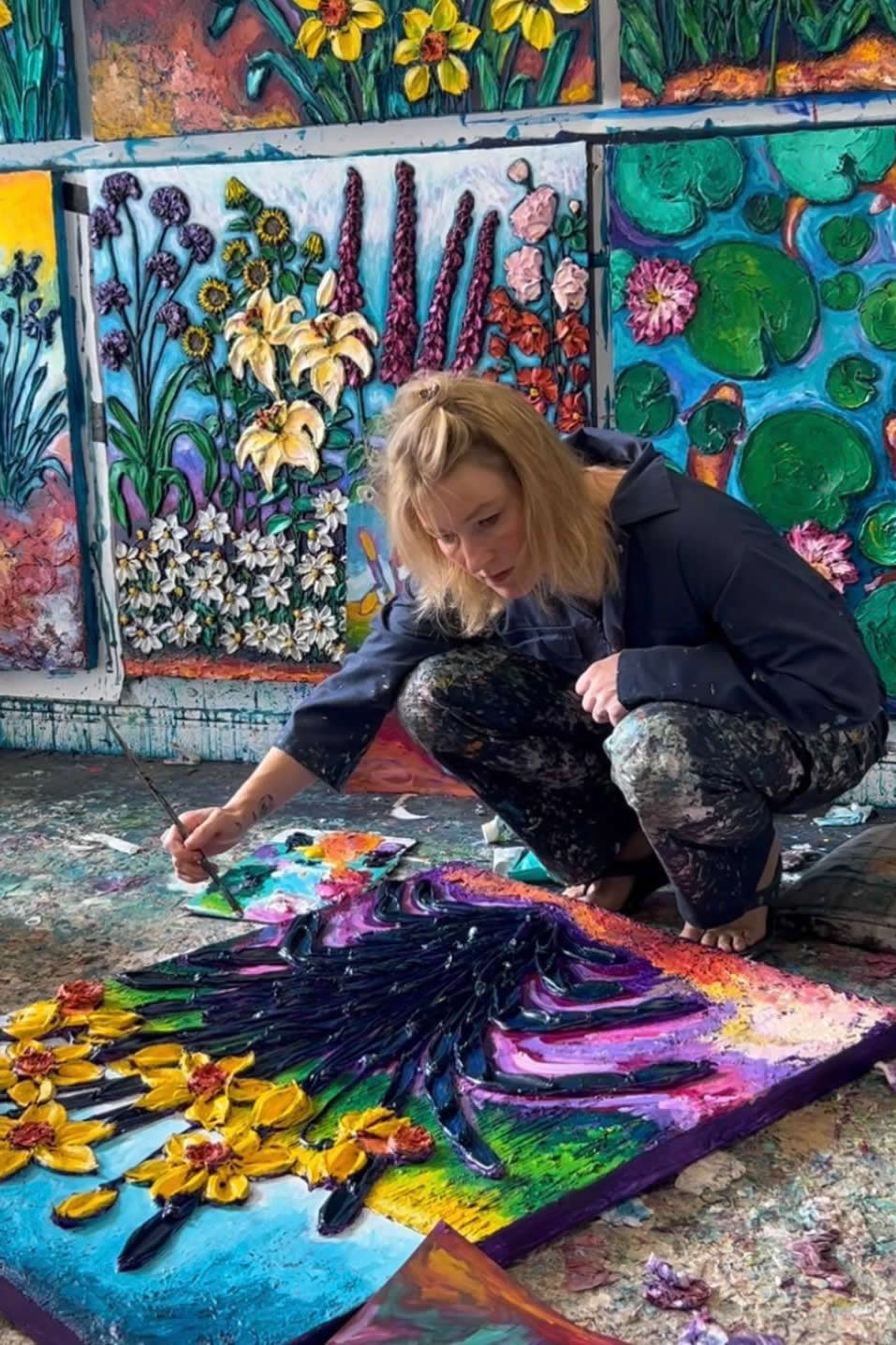
Scarlett's work goes beyond the optical realism of impressionism to begin exploring the emotional and symbolic content of art. Her painting style is distinctive and characterized by several key elements; Bold and vibrant colours, applied directly from the tube in thick impasto layers. Her colour choices are expressive and emotional, reflecting her own visceral experience of the world around her. Dramatic Brushwork, Scarlett's brushwork is energetic and expressive, using short visible brushstrokes which are incredibly pronounced and dynamic. Textured Surfaces, Scarlett builds up paint on her canvas, adding depth and a tactile quality to her work. This impasto technique involves applying thick layers of paint to the canvas, allowing the viewer to see and feel the physical texture of the paint. Lastly, Scarlett is incredibly drawn to natural subject matter including landscapes and portraits. She has a deep and profound affinity for depicting the countryside, flowers, and rural life, due to the grounding and intense encounters she finds in this through her experience with borderline personality disorder (also known as Emotional Intensity Disorder).
Many individuals with BPD have faced significant challenges in their lives often experiencing a high intensity spectrum of emotion, including reactivity and sensitivity to surroundings being heightened; the experience of dropping a mug can produce the same emotional reaction as that of losing a loved one. Borderline Personality disorder has the highest suicide rate of any mental illness.
Scarlett has experienced five nervous breakdowns and in her deepest despair, has always been brought back by the act of painting and being in nature. Since she was a child, painting has been Scarlett’s way of understanding and accepting herself within the world and through the act of painting and sourcing inspiration has been able find a healthy way to exist within herself; for this she is forever grateful to painting and the impressionists that inspired her.
The impressionists have been able to create a world that resembles her own mind and inspired her to see, even in the darkness, the light through bright and warm splashes of colour. The impressionists lead the way for her as a child, her bedtime stories were the works of Van Gough and Monet. They taught her to be unafraid of her emotions and dance in the colour and freeness of expression. Where many see a road as grey, Van Gough saw all the minute multi-colours that make up our streets. This is how Scarlett describes having BPD, being completely exposed to the world but also to all its beauty and colour. Through painting she can make the world something beautiful rather than crippling and overwhelmingly blinding.
Despite the many challenges which should not be understated Scarlett has chosen not to see her life as an artist with BPD as problematic, rather describing herself as lucky to have it and connect so deeply with her environment. Capturing the vibrancy of her experience of the world and nature is the reason she is a painter, using art as a means of self-expression and coping with her emotions. Scarlett finds a healthy way to exist through these artworks conveying one-tenth of her visceral experience of nature through her canvas. Painting has taught her to accept herself and cherish her disorder.
The presence of flowers in artwork can have a positive psychological impact on viewers. Studies suggest that exposure to nature, even in art form, can reduce stress and promote a sense of well-being. Floral artwork, with its connection to nature, can contribute to a calming and uplifting environment.
Portrait photography by Ak Suggi
Written by Beth Evans


